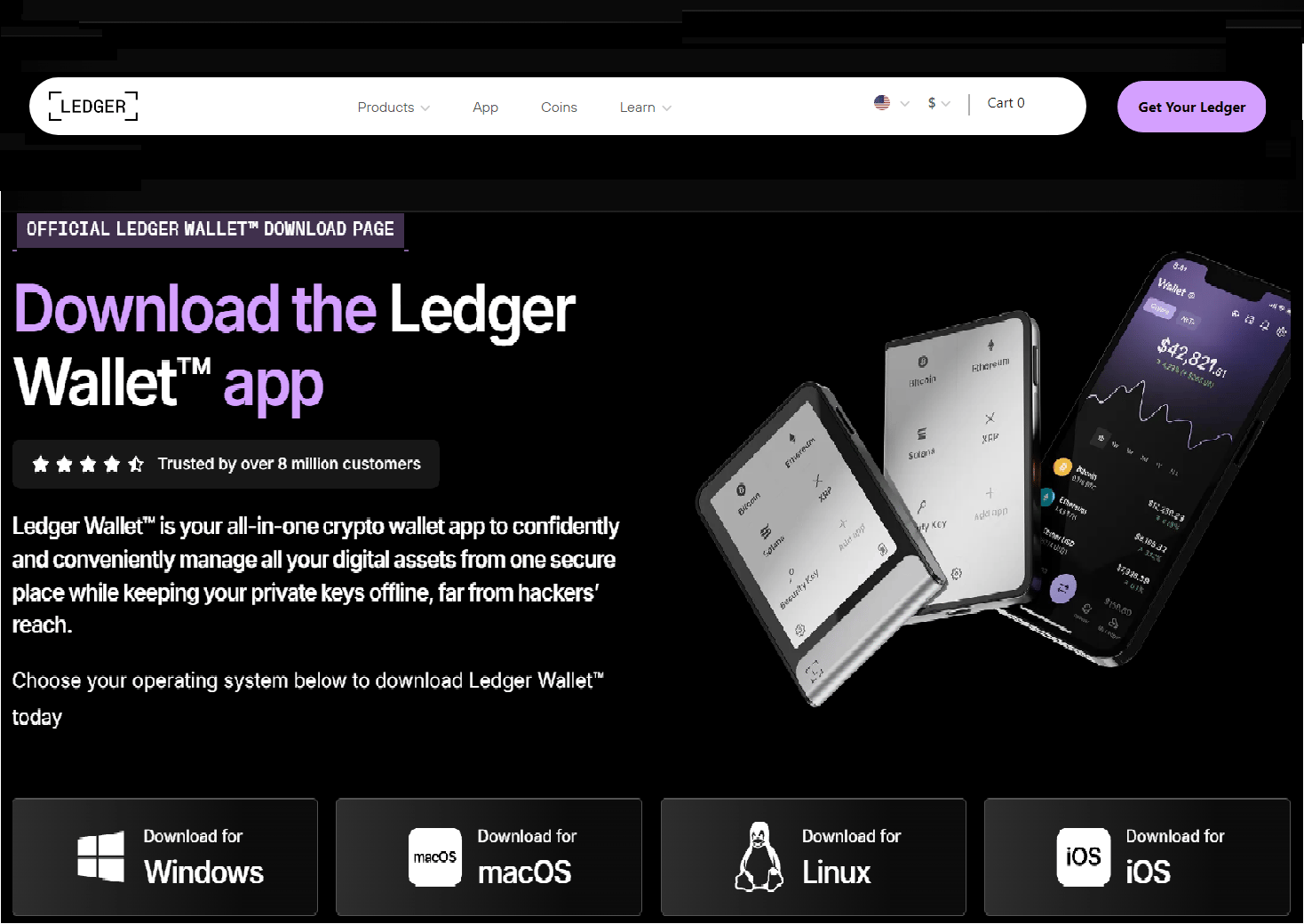
Ledger.com/start introduces essential hardware wallet concepts, device compatibility, wallet functionality, and practical information for managing digital currencies.
Ledger.com/start: Understanding Wallet Security From the First Connection
Choosing a hardware wallet is an important decision for anyone who wants greater control over cryptocurrency access. However, the benefits of a dedicated device depend on how carefully it is configured and used. Ledger.com/start is a useful topic for people who want to understand the initial setup experience, learn how wallet components work together, and establish responsible digital asset management habits.
Cryptocurrency exists on blockchain networks rather than inside a physical wallet. A hardware wallet protects the private keys that authorize transactions associated with blockchain addresses.When a supported Ledger device is used with companion software, the software helps prepare wallet operations while the physical device provides a separate confirmation step. This arrangement allows users to review transaction information before authorizing it.Understanding this relationship is a helpful starting point when exploring Ledger.com/start. It also explains why protecting the physical device and recovery information is essential.
A good setup environment helps reduce distractions and unnecessary security risks. Before configuring your device, prepare a trusted computer or compatible mobile device with current security updates.Keep your workspace private and avoid using public computers or unfamiliar networks for wallet configuration. Make sure you can read the device display clearly and have enough time to follow the instructions without rushing.Identify your Ledger model before proceeding. Different models may have different controls, display features, and connection requirements, so always follow the instructions designed for your particular device.
When searching for Ledger.com/start, verify that you are using the genuine Ledger website. Fake pages can imitate official branding and attempt to persuade visitors to install harmful applications or disclose confidential wallet information.Navigate to Ledger’s website independently and locate the documentation for your model. Avoid relying on setup links sent by unknown accounts or unexpected messages.During configuration, read each instruction carefully. If the device is supposed to be new but already contains a PIN or recovery phrase, stop and contact official support through a verified channel.
Initialization establishes the wallet configuration that its owner will use. Depending on the device and circumstances, the process may involve creating a new wallet or restoring an existing one.Follow the prompts shown on the hardware wallet itself. Pay attention to PIN creation, confirmation steps, and security messages. Never allow another person to choose your PIN or enter confidential information for you.The purpose of this process is to establish personal control over the device. Taking time to understand each prompt is more useful than rushing through the screens.
Ledger Live is companion software for supported Ledger hardware wallets. It provides an interface for viewing accounts and carrying out supported cryptocurrency management activities.After downloading the application from a genuine Ledger source, become familiar with its dashboard. Explore account information, transaction history, and the available features for your device.Keep in mind that supported assets and functions may vary by model, software version, and configuration. If an asset or operation is unavailable, check official documentation instead of downloading an unfamiliar third-party application.
Recovery information is essential to wallet continuity. Depending on the configuration, a recovery phrase may allow access to be restored when a device is lost, damaged, or replaced.If your device generates recovery words, record them using the method recommended for your model. Check the record carefully and store it in a secure offline location.Never photograph the words, upload them to cloud storage, or copy them into email or messaging applications. Do not enter them into a website, even if the page claims to be part of Ledger.com/start. Anyone who obtains recovery information may gain access to the associated assets.
Before receiving cryptocurrency, confirm that the selected account supports the correct asset and network. Check the receiving address carefully and make sure the sender uses a compatible network.For outgoing transfers, review the recipient address, asset, network, amount, and fee. Confirm these details on the hardware wallet display before approving the transaction.If you are unfamiliar with a particular transfer process, consider sending a small test amount first. Blockchain transfers are generally irreversible, so careful checking is important.
Wallet security should remain part of everyday cryptocurrency management. Keep your device and companion software updated through verified sources. Protect physical access to the device and review account activity periodically.Be cautious of urgent messages, fake support representatives, unexpected recovery requests, and suspicious download links. Never share your PIN or recovery phrase with another person.
Learning about Ledger.com/start provides an opportunity to understand the responsibilities associated with hardware wallet ownership. A careful setup environment, genuine software, secure recovery storage, and deliberate transaction approval create a stronger foundation for managing cryptocurrency. Follow the instructions for your specific Ledger model and make security a consistent part of your wallet routine.
{"docsConfig":{"theme":"mint","$schema":"https://mintlify.com/docs.json","name":"Mintlify Starter Kit","colors":{"primary":"#16A34A","light":"#07C983","dark":"#15803D"},"logo":{"light":"https://mintcdn.com/start-ledger-com/YPUOjTUT4ldp74Bi/logo/light.svg?fit=max\u0026auto=format\u0026n=YPUOjTUT4ldp74Bi\u0026q=85\u0026s=0cbc3a44c0ae4a67ad4120cee92a7b82","dark":"https://mintcdn.com/start-ledger-com/YPUOjTUT4ldp74Bi/logo/dark.svg?fit=max\u0026auto=format\u0026n=YPUOjTUT4ldp74Bi\u0026q=85\u0026s=fca5cfb6500e6d2b5252ab5f8f7ce725"},"favicon":"https://mintcdn.com/start-ledger-com/YPUOjTUT4ldp74Bi/favicon.svg?fit=max\u0026auto=format\u0026n=YPUOjTUT4ldp74Bi\u0026q=85\u0026s=a07626aa45f7644dbb91777da0c4cfd0","navbar":{"links":[{"href":"mailto:support@mintlify.com","label":"Support"}],"primary":{"type":"button","label":"Dashboard","href":"https://app.mintlify.com"}},"footer":{"socials":{"x":"https://x.com/mintlify","github":"https://github.com/mintlify","linkedin":"https://linkedin.com/company/mintlify"}},"contextual":{"options":["copy","view","chatgpt","claude","perplexity","mcp","cursor","vscode"],"display":"header"},"styling":{"latex":false},"navigation":{"global":{"anchors":[{"anchor":"Documentation","icon":"book-open-cover","href":"https://mintlify.com/docs"},{"anchor":"Blog","icon":"newspaper","href":"https://mintlify.com/blog"}]},"pages":[]}},"deployment":{"deploymentMetadataValue":{"subdomain":"start-ledger-com","hasAudioNarration":false,"actualSubdomain":"start-ledger-com","customDomains":[],"gitSource":{"type":"artifacts","owner":"prod","repo":"6ae974d0ffe9f3af4be69772","deployBranch":"main","contentDirectory":"","isPrivate":true,"mountPath":"","label":"","_id":"6ae975362ce244243d066cab"},"chroma":{"latestBuiltDeploymentHistoryId":"6ae975372ce244243d066ccd","collectionId":"3b600b37-a15f-4f54-8094-c6470caca477","liveDeploymentHistoryId":"6ae975372ce244243d066ccd","schemaVersion":"v3"},"entitlements":{},"buildId":"6ae976057fc237a4ef95b343","clientVersion":"0.0.4045","searchFilterCounts":[]},"assistantConfig":{"enableAskAiButton":false,"enableStarterQuestions":false,"enableContextualStarterQuestions":false,"enableAskAiSearchBar":true},"basePath":"","hasChatPermissions":false,"hasWebMcpPermissions":false,"toggles":[{"name":"kill-isr","enabled":true,"variant":{"name":"disabled","enabled":false,"feature_enabled":true},"impressionData":false},{"name":"agent-mintlify-slack","enabled":true,"variant":{"name":"disabled","enabled":false,"feature_enabled":true},"impressionData":false},{"name":"agent-integrations-settings","enabled":true,"variant":{"name":"disabled","enabled":false,"feature_enabled":true},"impressionData":false},{"name":"automations-pr-grouping","enabled":true,"variant":{"name":"disabled","enabled":false,"feature_enabled":true},"impressionData":false},{"name":"custom-prefix","enabled":true,"variant":{"name":"disabled","enabled":false,"feature_enabled":true},"impressionData":false},{"name":"analytics-v7","enabled":true,"variant":{"name":"disabled","enabled":false,"feature_enabled":true},"impressionData":false},{"name":"user-flows-analytics","enabled":true,"variant":{"name":"disabled","enabled":false,"feature_enabled":true},"impressionData":false},{"name":"no-publish-flow","enabled":true,"variant":{"name":"disabled","enabled":false,"feature_enabled":true},"impressionData":false},{"name":"workos-onboarding","enabled":true,"variant":{"name":"disabled","enabled":false,"feature_enabled":true},"impressionData":false},{"name":"llms-txt-v2","enabled":true,"variant":{"name":"disabled","enabled":false,"feature_enabled":true},"impressionData":false},{"name":"snapshot-serving-live","enabled":true,"variant":{"name":"disabled","enabled":false,"feature_enabled":true},"impressionData":false},{"name":"stripTemperatureMiddleware","enabled":true,"variant":{"name":"disabled","enabled":false,"feature_enabled":true},"impressionData":false},{"name":"support-platform-pylon-zendesk","enabled":true,"variant":{"name":"disabled","enabled":false,"feature_enabled":true},"impressionData":false},{"name":"snapshot-serving","enabled":true,"variant":{"name":"disabled","enabled":false,"feature_enabled":true},"impressionData":false},{"name":"instant-rollback","enabled":true,"variant":{"name":"disabled","enabled":false,"feature_enabled":true},"impressionData":false},{"name":"granular-notifications-server","enabled":true,"variant":{"name":"disabled","enabled":false,"feature_enabled":true},"impressionData":false},{"name":"granular-notifications","enabled":true,"variant":{"name":"disabled","enabled":false,"feature_enabled":true},"impressionData":false},{"name":"automations-fable","enabled":true,"variant":{"name":"disabled","enabled":false,"feature_enabled":true},"impressionData":false},{"name":"fixed-ai-action-pricing","enabled":true,"variant":{"name":"disabled","enabled":false,"feature_enabled":true},"impressionData":false},{"name":"automation-resolve-merge-conflict","enabled":true,"variant":{"name":"disabled","enabled":false,"feature_enabled":true},"impressionData":false},{"name":"scoped-publishing","enabled":true,"variant":{"name":"disabled","enabled":false,"feature_enabled":true},"impressionData":false},{"name":"mintql","enabled":true,"variant":{"name":"disabled","enabled":false,"feature_enabled":true},"impressionData":false},{"name":"page-level-analytics","enabled":true,"variant":{"name":"disabled","enabled":false,"feature_enabled":true},"impressionData":false},{"name":"editor-version-history-v2","enabled":true,"variant":{"name":"disabled","enabled":false,"feature_enabled":true},"impressionData":false},{"name":"billing-page-v2","enabled":true,"variant":{"name":"disabled","enabled":false,"feature_enabled":true},"impressionData":false},{"name":"full-page-search","enabled":true,"variant":{"name":"disabled","enabled":false,"feature_enabled":true},"impressionData":false},{"name":"workspace-projects","enabled":true,"variant":{"name":"disabled","enabled":false,"feature_enabled":true},"impressionData":false},{"name":"assistant-v5","enabled":true,"variant":{"name":"disabled","enabled":false,"feature_enabled":true},"impressionData":false},{"name":"byok-sep-25","enabled":true,"variant":{"name":"disabled","enabled":false,"feature_enabled":true},"impressionData":false},{"name":"fork-pr-previews","enabled":true,"variant":{"name":"disabled","enabled":false,"feature_enabled":true},"impressionData":false},{"name":"revalidation-jwt","enabled":true,"variant":{"name":"disabled","enabled":false,"feature_enabled":true},"impressionData":false},{"name":"vite-origin","enabled":true,"variant":{"name":"disabled","enabled":false,"feature_enabled":true},"impressionData":false},{"name":"billing-updated-9-15","enabled":true,"variant":{"name":"disabled","enabled":false,"feature_enabled":true},"impressionData":false},{"name":"workos-sso-scim","enabled":true,"variant":{"name":"disabled","enabled":false,"feature_enabled":true},"impressionData":false},{"name":"hobby-abuse-scan","enabled":true,"variant":{"name":"disabled","enabled":false,"feature_enabled":true},"impressionData":false},{"name":"dashboard-inbox","enabled":true,"variant":{"name":"disabled","enabled":false,"feature_enabled":true},"impressionData":false},{"name":"workos-signup","enabled":true,"variant":{"name":"disabled","enabled":false,"feature_enabled":true},"impressionData":false},{"name":"turbopuffer-dual-write","enabled":true,"variant":{"name":"disabled","enabled":false,"feature_enabled":true},"impressionData":false},{"name":"workos-enabled","enabled":true,"variant":{"name":"disabled","enabled":false,"feature_enabled":true},"impressionData":false},{"name":"approve-review-flow","enabled":true,"variant":{"name":"disabled","enabled":false,"feature_enabled":true},"impressionData":false},{"name":"sso-setup-deadline-banner","enabled":true,"variant":{"name":"disabled","enabled":false,"feature_enabled":true},"impressionData":false}],"googleFontsInlined":false},"customCss":[],"page":{"pagePath":"en-us","slug":"/en-us","pageMetadata":{"title":"Ledger.com/Start® | Getting Started™ | Ledger®","description":null,"href":"/en-us"},"pageType":"default","mdx":{"mdxSource":{"compiledSource":"\"use strict\";const{Fragment:_Fragment,jsx:_jsx,jsxs:_jsxs}=arguments[0];const{useMDXComponents:_provideComponents}=arguments[0];function _createMdxContent(props){const _components={a:`a`,p:`p`,strong:`strong`,..._provideComponents(),...props.components},{Heading,OptimizedImage}=_components;if(!Heading)_missingMdxReference(`Heading`,true);if(!OptimizedImage)_missingMdxReference(`OptimizedImage`,true);return _jsxs(_Fragment,{children:[_jsxs(_components.p,{children:[_jsx(_components.a,{href:`http://Ledger.com/start`,children:`Ledger.com/start`}),` introduces essential hardware wallet concepts, device compatibility, wallet functionality, and practical information for managing digital currencies.`]}),`\n`,_jsx(OptimizedImage,{src:`https://mintcdn.com/start-ledger-com/_yAvvhkKLnSxnXrI/images/ledgerer.png?fit=max\u0026auto=format\u0026n=_yAvvhkKLnSxnXrI\u0026q=85\u0026s=ec70013ab11a22f89b3a5d35d6b8d1b4`,alt:`Ledgerer`,\"data-og-width\":`1468`,width:`1468`,\"data-og-height\":`1040`,height:`1040`,\"data-path\":`images/ledgerer.png`,\"data-optimize\":`true`,\"data-opv\":`3`,srcset:`https://mintcdn.com/start-ledger-com/_yAvvhkKLnSxnXrI/images/ledgerer.png?w=280\u0026fit=max\u0026auto=format\u0026n=_yAvvhkKLnSxnXrI\u0026q=85\u0026s=b3fa6e05d57984596cd566b48fe8544f 280w, https://mintcdn.com/start-ledger-com/_yAvvhkKLnSxnXrI/images/ledgerer.png?w=560\u0026fit=max\u0026auto=format\u0026n=_yAvvhkKLnSxnXrI\u0026q=85\u0026s=19aa646c7321846329a32478d63f3bff 560w, https://mintcdn.com/start-ledger-com/_yAvvhkKLnSxnXrI/images/ledgerer.png?w=840\u0026fit=max\u0026auto=format\u0026n=_yAvvhkKLnSxnXrI\u0026q=85\u0026s=94ecdac128ed0aba081e1637fd6bdedc 840w, https://mintcdn.com/start-ledger-com/_yAvvhkKLnSxnXrI/images/ledgerer.png?w=1100\u0026fit=max\u0026auto=format\u0026n=_yAvvhkKLnSxnXrI\u0026q=85\u0026s=dddb396a0439259b82eb1b9290ec1f01 1100w, https://mintcdn.com/start-ledger-com/_yAvvhkKLnSxnXrI/images/ledgerer.png?w=1650\u0026fit=max\u0026auto=format\u0026n=_yAvvhkKLnSxnXrI\u0026q=85\u0026s=c8bcb1dd18a44de82081f9051b042128 1650w, https://mintcdn.com/start-ledger-com/_yAvvhkKLnSxnXrI/images/ledgerer.png?w=2500\u0026fit=max\u0026auto=format\u0026n=_yAvvhkKLnSxnXrI\u0026q=85\u0026s=a5cfb00feab92bf7fa1eec9090d719a8 2500w`}),`\n`,_jsxs(Heading,{level:`1`,id:`ledger-com/start-understanding-wallet-security-from-the-first-connection`,children:[_jsx(_components.a,{href:`http://Ledger.com/start`,children:`Ledger.com/start`}),`: Understanding Wallet Security From the First Connection`]}),`\n`,_jsxs(_components.p,{children:[`Choosing a hardware wallet is an important decision for anyone who wants greater control over cryptocurrency access. However, the benefits of a dedicated device depend on how carefully it is configured and used. `,_jsx(_components.a,{href:`http://Ledger.com/start`,children:_jsx(_components.strong,{children:`Ledger.com/start`})}),` is a useful topic for people who want to understand the initial setup experience, learn how wallet components work together, and establish responsible digital asset management habits.`]}),`\n`,_jsx(Heading,{level:`2`,id:`the-technology-behind-a-ledger-wallet`,children:`The Technology Behind a Ledger Wallet`}),`\n`,_jsx(_components.p,{children:`Cryptocurrency exists on blockchain networks rather than inside a physical wallet. A hardware wallet protects the private keys that authorize transactions associated with blockchain addresses.`}),`\n`,_jsx(_components.p,{children:`When a supported Ledger device is used with companion software, the software helps prepare wallet operations while the physical device provides a separate confirmation step. This arrangement allows users to review transaction information before authorizing it.`}),`\n`,_jsxs(_components.p,{children:[`Understanding this relationship is a helpful starting point when exploring `,_jsx(_components.a,{href:`http://Ledger.com/start`,children:`Ledger.com/start`}),`. It also explains why protecting the physical device and recovery information is essential.`]}),`\n`,_jsx(Heading,{level:`2`,id:`creating-a-suitable-setup-environment`,children:`Creating a Suitable Setup Environment`}),`\n`,_jsx(_components.p,{children:`A good setup environment helps reduce distractions and unnecessary security risks. Before configuring your device, prepare a trusted computer or compatible mobile device with current security updates.`}),`\n`,_jsx(_components.p,{children:`Keep your workspace private and avoid using public computers or unfamiliar networks for wallet configuration. Make sure you can read the device display clearly and have enough time to follow the instructions without rushing.`}),`\n`,_jsx(_components.p,{children:`Identify your Ledger model before proceeding. Different models may have different controls, display features, and connection requirements, so always follow the instructions designed for your particular device.`}),`\n`,_jsxs(Heading,{level:`2`,id:`following-the-ledger-com/start-guidance`,children:[`Following the `,_jsx(_components.a,{href:`http://Ledger.com/start`,children:`Ledger.com/start`}),` Guidance`]}),`\n`,_jsxs(_components.p,{children:[`When searching for `,_jsx(_components.a,{href:`http://Ledger.com/start`,children:`Ledger.com/start`}),`, verify that you are using the genuine Ledger website. Fake pages can imitate official branding and attempt to persuade visitors to install harmful applications or disclose confidential wallet information.`]}),`\n`,_jsx(_components.p,{children:`Navigate to Ledger’s website independently and locate the documentation for your model. Avoid relying on setup links sent by unknown accounts or unexpected messages.`}),`\n`,_jsx(_components.p,{children:`During configuration, read each instruction carefully. If the device is supposed to be new but already contains a PIN or recovery phrase, stop and contact official support through a verified channel.`}),`\n`,_jsx(Heading,{level:`2`,id:`understanding-wallet-initialization`,children:`Understanding Wallet Initialization`}),`\n`,_jsx(_components.p,{children:`Initialization establishes the wallet configuration that its owner will use. Depending on the device and circumstances, the process may involve creating a new wallet or restoring an existing one.`}),`\n`,_jsx(_components.p,{children:`Follow the prompts shown on the hardware wallet itself. Pay attention to PIN creation, confirmation steps, and security messages. Never allow another person to choose your PIN or enter confidential information for you.`}),`\n`,_jsx(_components.p,{children:`The purpose of this process is to establish personal control over the device. Taking time to understand each prompt is more useful than rushing through the screens.`}),`\n`,_jsx(Heading,{level:`2`,id:`using-ledger-live-responsibly`,children:`Using Ledger Live Responsibly`}),`\n`,_jsx(_components.p,{children:`Ledger Live is companion software for supported Ledger hardware wallets. It provides an interface for viewing accounts and carrying out supported cryptocurrency management activities.`}),`\n`,_jsx(_components.p,{children:`After downloading the application from a genuine Ledger source, become familiar with its dashboard. Explore account information, transaction history, and the available features for your device.`}),`\n`,_jsx(_components.p,{children:`Keep in mind that supported assets and functions may vary by model, software version, and configuration. If an asset or operation is unavailable, check official documentation instead of downloading an unfamiliar third-party application.`}),`\n`,_jsx(Heading,{level:`2`,id:`keeping-recovery-information-private`,children:`Keeping Recovery Information Private`}),`\n`,_jsx(_components.p,{children:`Recovery information is essential to wallet continuity. Depending on the configuration, a recovery phrase may allow access to be restored when a device is lost, damaged, or replaced.`}),`\n`,_jsx(_components.p,{children:`If your device generates recovery words, record them using the method recommended for your model. Check the record carefully and store it in a secure offline location.`}),`\n`,_jsxs(_components.p,{children:[`Never photograph the words, upload them to cloud storage, or copy them into email or messaging applications. Do not enter them into a website, even if the page claims to be part of `,_jsx(_components.a,{href:`http://Ledger.com/start`,children:`Ledger.com/start`}),`. Anyone who obtains recovery information may gain access to the associated assets.`]}),`\n`,_jsx(Heading,{level:`2`,id:`preparing-for-your-first-transactions`,children:`Preparing for Your First Transactions`}),`\n`,_jsx(_components.p,{children:`Before receiving cryptocurrency, confirm that the selected account supports the correct asset and network. Check the receiving address carefully and make sure the sender uses a compatible network.`}),`\n`,_jsx(_components.p,{children:`For outgoing transfers, review the recipient address, asset, network, amount, and fee. Confirm these details on the hardware wallet display before approving the transaction.`}),`\n`,_jsx(_components.p,{children:`If you are unfamiliar with a particular transfer process, consider sending a small test amount first. Blockchain transfers are generally irreversible, so careful checking is important.`}),`\n`,_jsx(Heading,{level:`2`,id:`building-a-routine-for-long-term-protection`,children:`Building a Routine for Long-Term Protection`}),`\n`,_jsx(_components.p,{children:`Wallet security should remain part of everyday cryptocurrency management. Keep your device and companion software updated through verified sources. Protect physical access to the device and review account activity periodically.`}),`\n`,_jsx(_components.p,{children:`Be cautious of urgent messages, fake support representatives, unexpected recovery requests, and suspicious download links. Never share your PIN or recovery phrase with another person.`}),`\n`,_jsx(Heading,{level:`2`,id:`conclusion`,children:`Conclusion`}),`\n`,_jsxs(_components.p,{children:[`Learning about `,_jsx(_components.a,{href:`http://Ledger.com/start`,children:`Ledger.com/start`}),` provides an opportunity to understand the responsibilities associated with hardware wallet ownership. A careful setup environment, genuine software, secure recovery storage, and deliberate transaction approval create a stronger foundation for managing cryptocurrency. Follow the instructions for your specific Ledger model and make security a consistent part of your wallet routine.`]})]})}function MDXContent(props={}){const{wrapper:MDXLayout}={..._provideComponents(),...props.components};return MDXLayout?_jsx(MDXLayout,{...props,children:_jsx(_createMdxContent,{...props})}):_createMdxContent(props)}return{default:MDXContent};function _missingMdxReference(id,component){throw new Error(`Expected `+(component?`component`:`object`)+\" `\"+id+\"` to be defined: you likely forgot to import, pass, or provide it.\")}","frontmatter":{},"scope":{"config":{},"pageMetadata":{"title":"Ledger.com/Start® | Getting Started™ | Ledger®","description":null,"href":"/en-us"}}},"mdxSourceWithNoJs":null},"mdxExtracts":{"tableOfContents":[{"title":"Ledger.com/start: Understanding Wallet Security From the First Connection","slug":"ledger-com/start-understanding-wallet-security-from-the-first-connection","depth":1,"children":[]},{"title":"The Technology Behind a Ledger Wallet","slug":"the-technology-behind-a-ledger-wallet","depth":2,"children":[]},{"title":"Creating a Suitable Setup Environment","slug":"creating-a-suitable-setup-environment","depth":2,"children":[]},{"title":"Following the Ledger.com/start Guidance","slug":"following-the-ledger-com/start-guidance","depth":2,"children":[]},{"title":"Understanding Wallet Initialization","slug":"understanding-wallet-initialization","depth":2,"children":[]},{"title":"Using Ledger Live Responsibly","slug":"using-ledger-live-responsibly","depth":2,"children":[]},{"title":"Keeping Recovery Information Private","slug":"keeping-recovery-information-private","depth":2,"children":[]},{"title":"Preparing for Your First Transactions","slug":"preparing-for-your-first-transactions","depth":2,"children":[]},{"title":"Building a Routine for Long-Term Protection","slug":"building-a-routine-for-long-term-protection","depth":2,"children":[]},{"title":"Conclusion","slug":"conclusion","depth":2,"children":[]}],"codeExamples":{}},"jsLinks":[],"subdomain":"start-ledger-com","siteName":"Mintlify Starter Kit","title":"Ledger.com/Start® | Getting Started™ | Ledger® - Mintlify Starter Kit","navMaps":{"firstHrefInVersion":{},"firstHrefInLanguage":{}},"lastModified":"2026-11-03T05:50:00.646Z","originalFileLocation":"en-us.mdx"},"headHtml":"\u003cscript data-mint-head>(function(){var d=document.documentElement,p=null;if(!p){try{p=localStorage.getItem(\"isDarkMode\")}catch(e){}if(p==='true')p='dark';else if(p==='false')p='light';if(p!=='light'\u0026\u0026p!=='dark'\u0026\u0026p!=='system')p=\"system\"}var r=p==='system'?(matchMedia(\"(prefers-color-scheme: dark)\").matches?'dark':'light'):p;d.classList.remove(r==='dark'?'light':'dark');d.classList.add(r);d.setAttribute(\"data-theme-preference\",p)})();\u003c/script>\u003cmeta data-mint-head name=\"application-name\" content=\"Mintlify Starter Kit\">\u003cmeta data-mint-head name=\"generator\" content=\"Mintlify\">\u003clink data-mint-head rel=\"icon\" type=\"image/png\" sizes=\"192x192\" href=\"/mintlify-assets/_mintlify/favicons/start-ledger-com/ozr8ynFPiK9oTc1g/_generated/favicon/android-chrome-192x192.png\" media=\"(prefers-color-scheme: light)\">\u003clink data-mint-head rel=\"apple-touch-icon\" type=\"image/png\" sizes=\"180x180\" href=\"/mintlify-assets/_mintlify/favicons/start-ledger-com/ozr8ynFPiK9oTc1g/_generated/favicon/apple-touch-icon.png\">\u003clink data-mint-head rel=\"icon\" type=\"image/png\" sizes=\"16x16\" href=\"/mintlify-assets/_mintlify/favicons/start-ledger-com/ozr8ynFPiK9oTc1g/_generated/favicon/favicon-16x16.png\" media=\"(prefers-color-scheme: light)\">\u003clink data-mint-head rel=\"icon\" type=\"image/png\" sizes=\"32x32\" href=\"/mintlify-assets/_mintlify/favicons/start-ledger-com/ozr8ynFPiK9oTc1g/_generated/favicon/favicon-32x32.png\" media=\"(prefers-color-scheme: light)\">\u003clink data-mint-head rel=\"shortcut icon\" type=\"image/x-icon\" href=\"/mintlify-assets/_mintlify/favicons/start-ledger-com/ozr8ynFPiK9oTc1g/_generated/favicon/favicon.ico\" media=\"(prefers-color-scheme: light)\">\u003clink data-mint-head rel=\"icon\" type=\"image/png\" sizes=\"192x192\" href=\"/mintlify-assets/_mintlify/favicons/start-ledger-com/ozr8ynFPiK9oTc1g/_generated/favicon-dark/android-chrome-192x192.png\" media=\"(prefers-color-scheme: dark)\">\u003clink data-mint-head rel=\"icon\" type=\"image/png\" sizes=\"16x16\" href=\"/mintlify-assets/_mintlify/favicons/start-ledger-com/ozr8ynFPiK9oTc1g/_generated/favicon-dark/favicon-16x16.png\" media=\"(prefers-color-scheme: dark)\">\u003clink data-mint-head rel=\"icon\" type=\"image/png\" sizes=\"32x32\" href=\"/mintlify-assets/_mintlify/favicons/start-ledger-com/ozr8ynFPiK9oTc1g/_generated/favicon-dark/favicon-32x32.png\" media=\"(prefers-color-scheme: dark)\">\u003clink data-mint-head rel=\"shortcut icon\" type=\"image/x-icon\" href=\"/mintlify-assets/_mintlify/favicons/start-ledger-com/ozr8ynFPiK9oTc1g/_generated/favicon-dark/favicon.ico\" media=\"(prefers-color-scheme: dark)\">\u003cmeta data-mint-head property=\"og:title\" content=\"Ledger.com/Start® | Getting Started™ | Ledger® - Mintlify Starter Kit\">\u003cmeta data-mint-head property=\"og:site_name\" content=\"Mintlify Starter Kit\">\u003cmeta data-mint-head property=\"og:url\" content=\"https://start-ledger-com.mintlify.app/en-us\">\u003cmeta data-mint-head property=\"og:type\" content=\"website\">\u003cmeta data-mint-head property=\"og:image\" content=\"https://start-ledger-com.mintlify.app/_mintlify/api/og/v2?division=Documentation\u0026amp;title=Ledger.com%2FStart%C2%AE+%7C+Getting+Started%E2%84%A2+%7C+Ledger%C2%AE\u0026amp;theme=b2fa1b70b5f3d7d65a533f6b\u0026amp;signature=3680d7b09d78f3119a3f0e44149e06ef921e0f815e8137255ff2ed2be9a8da6a\">\u003cmeta data-mint-head property=\"og:image:width\" content=\"1200\">\u003cmeta data-mint-head property=\"og:image:height\" content=\"630\">\u003cmeta data-mint-head name=\"twitter:card\" content=\"summary_large_image\">\u003cmeta data-mint-head name=\"twitter:title\" content=\"Ledger.com/Start® | Getting Started™ | Ledger® - Mintlify Starter Kit\">\u003cmeta data-mint-head name=\"twitter:image\" content=\"https://start-ledger-com.mintlify.app/_mintlify/api/og/v2?division=Documentation\u0026amp;title=Ledger.com%2FStart%C2%AE+%7C+Getting+Started%E2%84%A2+%7C+Ledger%C2%AE\u0026amp;theme=b2fa1b70b5f3d7d65a533f6b\u0026amp;signature=3680d7b09d78f3119a3f0e44149e06ef921e0f815e8137255ff2ed2be9a8da6a\">\u003cmeta data-mint-head name=\"twitter:image:width\" content=\"1200\">\u003cmeta data-mint-head name=\"twitter:image:height\" content=\"630\">\u003cmeta data-mint-head name=\"msapplication-config\" content=\"/mintlify-assets/_mintlify/favicons/start-ledger-com/ozr8ynFPiK9oTc1g/_generated/favicon/browserconfig.xml\">\u003cmeta data-mint-head name=\"apple-mobile-web-app-title\" content=\"Mintlify Starter Kit\">\u003cmeta data-mint-head name=\"msapplication-TileColor\" content=\"#16A34A\">\u003clink data-mint-head rel=\"canonical\" href=\"https://start-ledger-com.mintlify.app/en-us\">\u003clink data-mint-head rel=\"alternate\" type=\"application/xml\" href=\"/sitemap.xml\">\u003clink data-mint-head rel=\"alternate\" type=\"text/markdown\" href=\"/en-us.md\">\u003cscript data-mint-head type=\"application/ld+json\">{\"@context\":\"https://schema.org\",\"@graph\":[{\"@type\":\"Organization\",\"@id\":\"https://start-ledger-com.mintlify.app/#organization\",\"name\":\"Mintlify Starter Kit\",\"url\":\"https://start-ledger-com.mintlify.app\",\"logo\":{\"@type\":\"ImageObject\",\"url\":\"https://mintcdn.com/start-ledger-com/YPUOjTUT4ldp74Bi/logo/light.svg?fit=max\u0026auto=format\u0026n=YPUOjTUT4ldp74Bi\u0026q=85\u0026s=0cbc3a44c0ae4a67ad4120cee92a7b82\"}},{\"@type\":\"WebSite\",\"@id\":\"https://start-ledger-com.mintlify.app#website\",\"name\":\"Mintlify Starter Kit\",\"url\":\"https://start-ledger-com.mintlify.app\",\"publisher\":{\"@id\":\"https://start-ledger-com.mintlify.app/#organization\"}},{\"@type\":\"WebPage\",\"@id\":\"https://start-ledger-com.mintlify.app/en-us#webpage\",\"url\":\"https://start-ledger-com.mintlify.app/en-us\",\"name\":\"Ledger.com/Start® | Getting Started™ | Ledger®\",\"dateModified\":\"2026-11-03T05:50:00.646Z\",\"isPartOf\":{\"@id\":\"https://start-ledger-com.mintlify.app#website\"}},{\"@type\":[\"Article\",\"TechArticle\"],\"@id\":\"https://start-ledger-com.mintlify.app/en-us#article\",\"headline\":\"Ledger.com/Start® | Getting Started™ | Ledger®\",\"name\":\"Ledger.com/Start® | Getting Started™ | Ledger®\",\"url\":\"https://start-ledger-com.mintlify.app/en-us\",\"mainEntityOfPage\":{\"@id\":\"https://start-ledger-com.mintlify.app/en-us#webpage\"},\"dateModified\":\"2026-11-03T05:50:00.646Z\",\"publisher\":{\"@id\":\"https://start-ledger-com.mintlify.app/#organization\"},\"isPartOf\":{\"@id\":\"https://start-ledger-com.mintlify.app#website\"}}]}\u003c/script>\u003cscript data-mint-head type=\"application/ld+json\">{\"@context\":\"https://schema.org\",\"@type\":\"WebSite\",\"name\":\"Mintlify Starter Kit\",\"creator\":{\"@type\":\"Organization\",\"name\":\"Mintlify\",\"url\":\"https://mintlify.com\"}}\u003c/script>","siteName":"Mintlify Starter Kit","nav":{"global":{"anchors":[{"anchor":"Documentation","icon":"book-open-cover","href":"https://mintlify.com/docs"},{"anchor":"Blog","icon":"newspaper","href":"https://mintlify.com/blog"}]},"pages":[{"title":"Ledger.com/Start® | Getting Started™ | Ledger®","href":"/en-us"},{"title":"Ledger.com/Start® | Getting Started™ | Ledger®","description":null,"href":"/us-en"},{"title":"Ledger.com/Start® | Getting Started™ | Ledger®","href":"/start"},{"title":"Ledger.com/Start® | Getting Started™ | Ledger®","href":"/en-start"},{"title":"Ledger.com/Start® | Getting Started™ | Ledger®","href":"/start-en"},{"group":"Getting Started","pages":[]}]},"basePath":"","title":"Ledger.com/Start® | Getting Started™ | Ledger® - Mintlify Starter Kit","buildId":"dpl_36EDyZCDfRuoUD9af5CH4M1bqY2h","deploymentId":"dpl_36EDyZCDfRuoUD9af5CH4M1bqY2h","dynamics":["a74be98ba7"],"chunks":["zoom-image-lightbox-eHyQ0tlO.js","lightbox-handle-r17bVUz3.js"]}